We are excited to announce that the Law Office of Paul Gattone is now the Arizona Civil Rights Law Center (ACRLC). Same dedicated team. Same mission of advocacy. New name, reflecting what we do and our vision for the future.

Our History

The Arizona Civil Rights Law Center traces its origins to January 1990.

The Southern Arizona People’s Law Center

1990–2003

1990.

The Arizona Civil Rights Law Center traces its origins to January 1990 when Attorney Paul Gattone received a $25,000 seed grant, rented a small office in downtown Tucson, and established a nonprofit organization devoted to tenants’ rights and civil rights. The Southern Arizona People’s Law Center existed for 12 years and developed a local reputation for advocacy both inside and outside the courtroom. Eventually expanding to six staff members, the Law Center took on numerous impact lawsuits, assisted thousands of Tucson tenants, and earned Paul Gattone the moniker “the People’s Lawyer.”
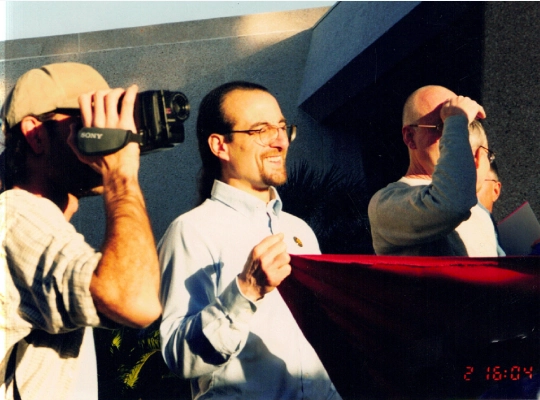
Smiling man in glasses holding a red banner at an outdoor rally while a man records with a camcorder, from the archives of Arizona Civil Rights Law Center
Black and gold plaque reading “Southern Arizona People’s Law Center” on a red background, shared by Arizona Civil Rights Law Center

The early years

Its first lawsuit challenged the Arizona Housing Trust Fund’s diversion of money away from the one thing it was legally mandated to finance: permanent affordable housing for low-income Arizonans.

Shortly after, the Law Center authored a report shining a spotlight on the assembly-line eviction court process that routinely dispossessed tenants with minimal due process. Many of the report’s findings were later addressed in a set of procedural rules created in 2008.

1994

Inside the courtroom, the Law Center embraced innovative legal strategies seeking systemic reforms. In 1994, the Law Center represented same-sex couples who had been denied marriage licenses. The case of Callender v. Corbett is believed to be only the second lawsuit of its kind seeking to overturn laws defining marriage as between a man and woman.

Although marriage would remain elusive to same-sex Arizona couples for twenty more years, the Callender case helped lead the way. A decade after Callender, the Massachusetts Supreme Court made that state the first to officially recognize same-sex marriage.

$25,000

seed grant

6

staff members

Dozens

of wrongly terminated workers

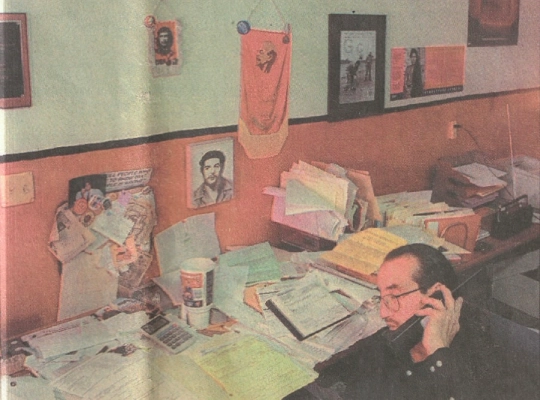
Man in glasses talking on the phone at a desk covered in case files and papers, in an archival newspaper photo shared by Arizona Civil Rights Law Center

1996

In 1996, the Law Center filed groundbreaking litigation on behalf of the unhoused. The lawsuit pressed the yet-untested legal theory that the unsheltered have a constitutional right to exist on public lands.

The Law Center argued that the Eighth Amendment prevented any government from criminalizing the mere act of sleeping, sitting, or resting when there was truly nowhere else to go. Although unsuccessful, the lawsuit paved the way for future litigation that culminated in binding legal precedent under the Eighth Amendment in 2018.

2003

The Southern Arizona People’s Law Center closed its doors in 2003. For over a decade, the small staff worked to keep families in their homes, improve living conditions for tenants and the unsheltered, and expand civil rights on behalf of those who had no other legal recourse.

A local paper summed up the spirit and approach of the Law Center and its founder.

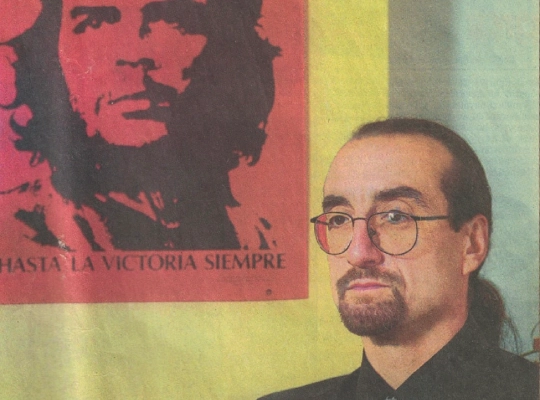
Archival 2003 newspaper photo of a man in glasses and a dark shirt with crossed arms, standing beside a red revolutionary poster, shared by Arizona Civil Rights Law Center

“Gattone has been raging against the machine—the powerful, the oppressive, the rich and the dishonest—for most of his life.”

Tucson Weekly

Private Practice

2003–2022

2003–2022.

Paul maintained this spirit into private practice, often filing lawsuits on behalf of victims of police misconduct, prison abuses, and housing discrimination. Under the banner of his private law firm, Paul brought several dozen federal lawsuits against Arizona police between 2003 and 2022.
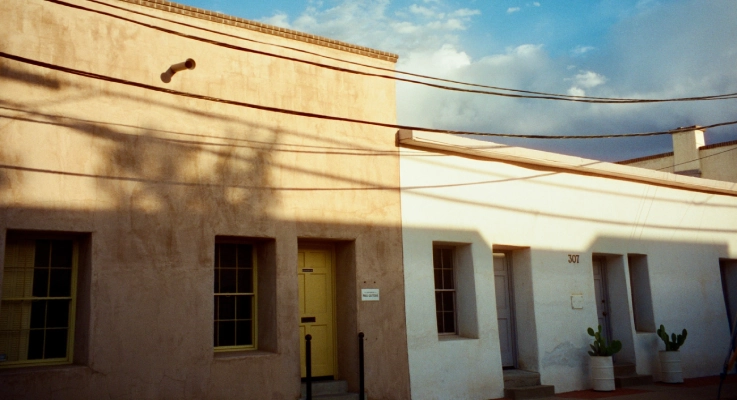
Historic adobe-style homes with a yellow door, deep-set windows, and potted cacti in an Arizona neighborhood served by Arizona Civil Rights Law Center

A New Chapter

2022–Today
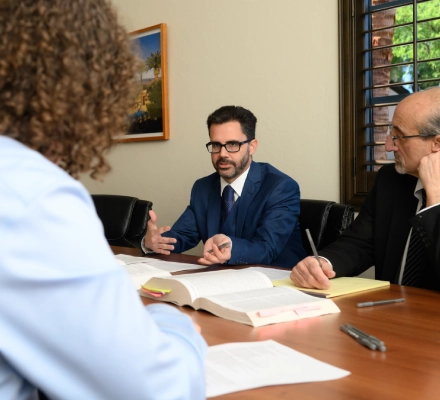
Attorneys at Arizona Civil Rights Law Center meeting with a client around a conference table with an open law book and legal pads

Dozens

of wrongly terminated workers

700+

tenants facing eviction assisted

2022.

Beginning in 2022, Paul and a growing team began to set their sights on building a public interest law firm capable of taking on many of the same types of legal fights characterized by the Southern Arizona People’s Law Center of the 1990s.

Between 2022 and 2026, Billy Peard, Drew Fellows, Marlena Ruprecht, and Nousha Aldhefery joined the team to lay the groundwork for the next evolution of a civil rights law firm rooted in Paul’s enduring vision of service.

Between 2022 and 2026, the Law Office of Paul Gattone assisted over 700 tenants facing eviction, dozens of workers who had been wrongly terminated, and many more victims of police violence.
Today

2026

In 2026, the team determined that a new name should accompany the renewed focus on civil rights advocacy. The Arizona Civil Rights Law Center was born. Under the new name, ACRLC seeks to be a broad-based legal resource that is adaptable and built to last. Unlike its predecessor organization of the 90s, the ACRLC has a statewide focus and assists clients in all parts of Arizona.

Let’s Talk About Your Legal Issue

Take the first step toward resolution. Fill out our secure intake form below to share the details of your situation, and our team will review your information promptly.